
The UK government’s decision to trial social media bans, curfews and time limits for teenagers has prompted a familiar debate…
Some see it as a necessary step to protect young people. Others argue it risks being ineffective, easy to bypass, or overly simplistic.
But beyond the headlines, this trial opens up a more important question…
What kind of mental and emotional foundations are young people developing in a constantly connected world?
This goes beyond access to apps. It’s about how self-belief, identity and resilience are formed—the core building blocks of mental strength. If we’re serious about developing those foundations, we have to look at the environments shaping them.
There are several areas where reducing social media use could actively support that development.
First, real world experience.
Mental strength is built through doing hard things and seeing them through. But many young people are choosing scrolling over heading out to clubs, doing sports or meeting friends in the real-world. When we replace online gratification for real experiences, we create more moments of achievement ad challenge. Those moments are critical. They are how self-belief is formed: by finishing, improving, and realising “I can do this.”
Second, algorithmic influence and repeated narratives.
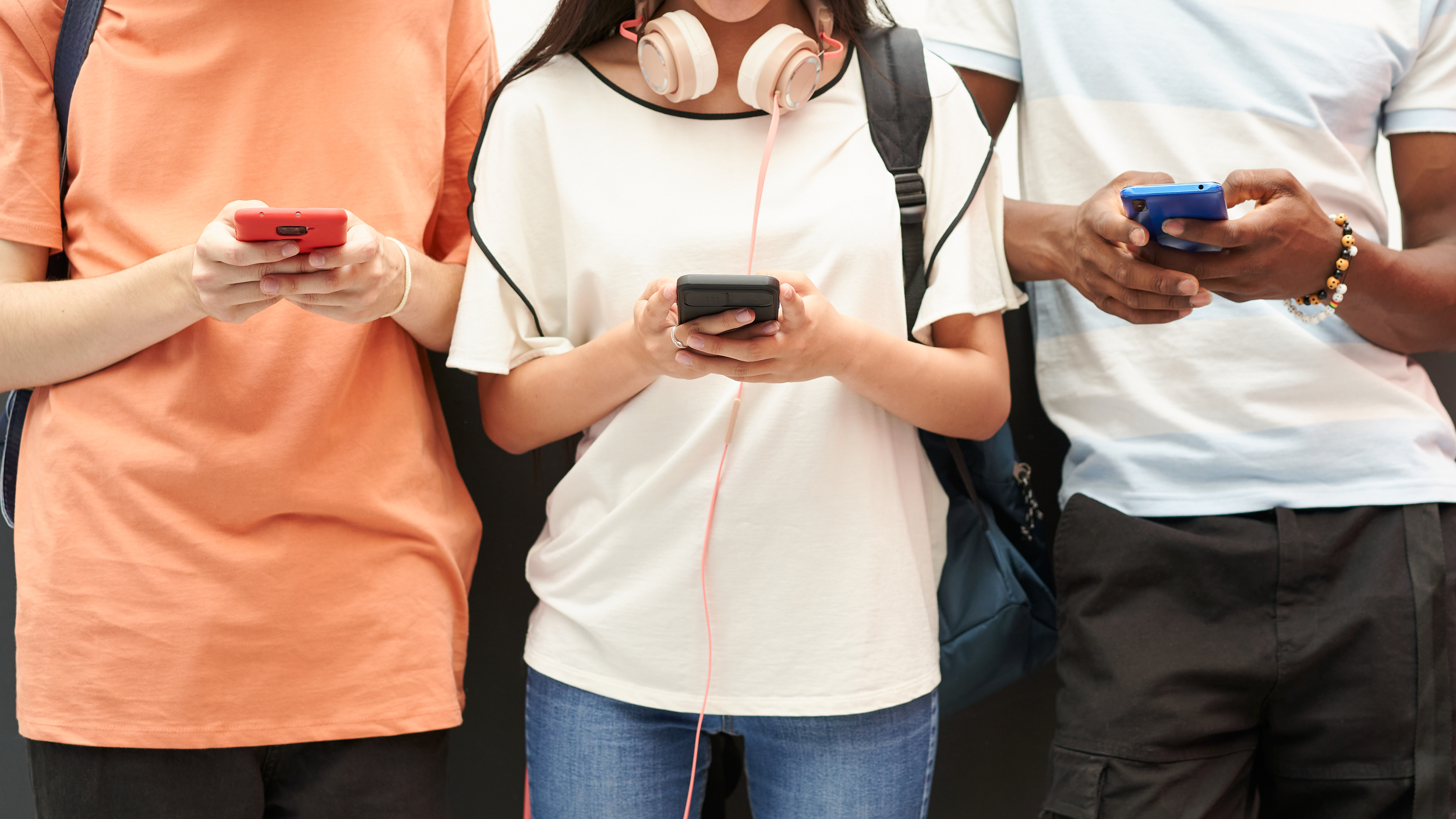
What our young people are seeing online is not neutral—it’s shaped by algorithms that feed them more of the same content, viewpoints and messages. Over time, this can narrow perspective and quietly shape beliefs about themselves, success and the world.
If those narratives are limiting—about what they should look like, achieve, or be—it can restrict how they see their own potential.
Exposure to extremes distorts reality. Algorithms tend to amplify:
Extreme success (“overnight millionaires”), Extreme views, Extreme lifestyles and that can skew expectations and create: Unrealistic benchmarks and s sense that “normal progress” = failure.
Reducing time in these environments creates space for broader, more diverse real-world experiences, which are essential for developing independent thinking, perspective and a stronger sense of self.
Third, reduced comparison.

Young people are growing up in an environment where they’re always measuring themselves—appearance, success, lifestyle.
This can create fragile confidence which is externally driven rather than internally anchored. Success starts to feel like something you perform, rather than something you actually build.
Alongside this, mistakes, opinions, and self-expression are often visible and judged and made public which can lead to risk aversion (fear of being “wrong” or trying something new in case they fail, Or the opposite: performative identity, shaped by validation rather than values
What does this means for mindset and resilience? We’re increasingly seeing two patterns emerge:
A. “High awareness, low robustness”
Young people can name their feelings and challenges—but may struggle to work through them. They understand mental health… but don’t always have the tools to endure discomfort.
B. “Externally anchored identity”
Confidence is often tied to:
Likes, feedback, or comparison
rather than:Effort, values, or internal standards
And that can make resilience more volatile.
Ultimately, mental strength isn’t built through restriction alone.
It’s built through experience - how young people engage with challenge, how they interpret setbacks, and how they come to see themselves.
Reducing constant digital distraction won’t solve everything, but it creates a chance to disconnect and reconnect with our real-world community, where stronger foundations can actually be developed.
Even short periods of reduced social media use can give young people a different reference point -a sense of what it feels like to focus, to rest properly, to engage more fully in the offline world, to get a different perspective.
Because self-belief is not built through being told “you’re capable”. It’s built through moments where young people realise, I can handle this.
Resilience is developed through repeated exposure to manageable challenge.
Mental strength is not about removing pressure altogether - but about increasing the capacity to deal with it.
So the question is not whether social media is good or harmful. It is clearly a bit of both.
The question is whether young people currently have the ability to navigate it well, to question what they are seeing and be able to challenge the narrative they are being fed.
If these trials help us better understand how to restore some of that balance, they will have served an important purpose.
Not because restrictions are the answer on their own.
But because they may help us start rebuilding something that sits underneath all of this:
Young people who can focus, can learn to fail forwards and who are less dependent on constant validation.
In other words, young people with the foundations of real self-belief, resilience and mental strength.